Essays and artwork by Mercia Kandukira, Leslie Heywood, Christy Caudill, and Suzanne Stryk

Essays and artwork by Mercia Kandukira, Leslie Heywood, Christy Caudill, and Suzanne Stryk

100 total words    

<1 minutes of reading

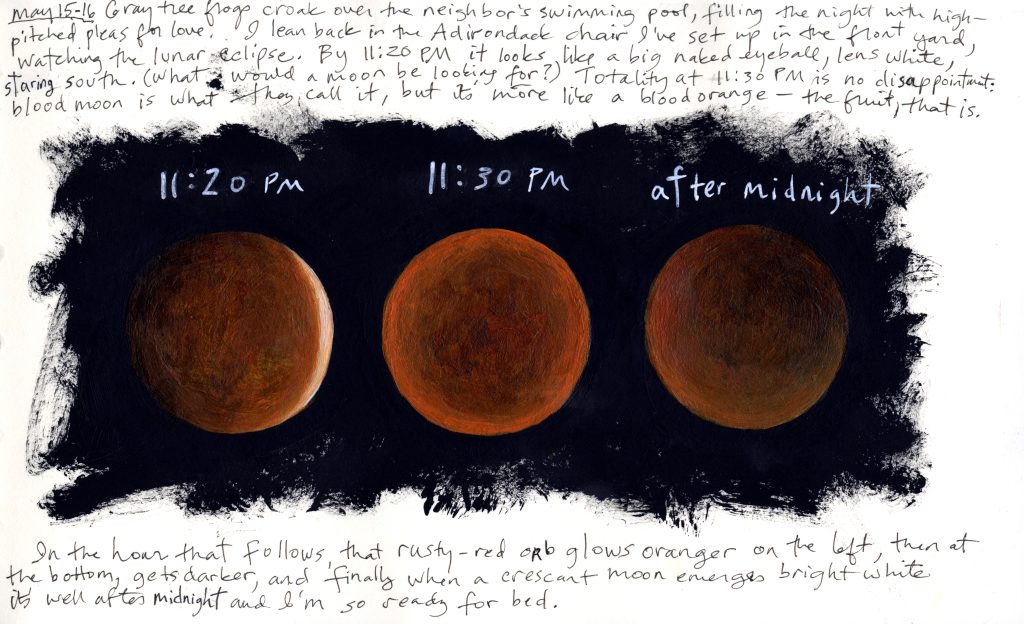
Three different images of an orange moon with a black background during a lunar eclipse on May 15 to 16, 2022. Image times range from 11:20 PM to just after midnight. Accompanying text on the image include the following: "Gray tree frogs croak over the neighbor’s swimming pool, filling the night with high-pitched pleas for love. I lean back in the Adirondack chair I’ve set up in the front yard, watching the lunar eclipse. By 11:20 p.m., it looks like a big, naked eyeball, lens white, staring south. (What would a moon be looking for?) Totality at 11:30 p.m. is no disappointment: blood moon is what they call it, but it’s more like a blood orange—the fruit, that is. In the hour that follows, that rusty-red orb glows orangier on the left, then at the bottom gets darker, and finally when a crescent moon emerges bright white, it’s well after midnight and I’m so ready for bed."

Dear Reader,

We’re delighted to bring you several new essays and artwork that explore climate change and fossil fuels, the cosmos and our ecological selves, and sketching lunar eclipses in a world of space telescopes, including “Spook Asem” by Mercia Kandukira and Leslie Heywood, “The Overview Effect, as Seen from Earth” by Christy Caudill, and “Sky Sketches” by Suzanne Stryk. We hope you enjoy these thoughtful pieces. We’ll return with more essays next week.

Read this week’s full newsletter here.

Much love,
Center for Humans & Nature

Image credit: Three different Moon phases during a lunar eclipse. Artwork by Suzanne Stryk.

Shopping Cart
Scroll to Top